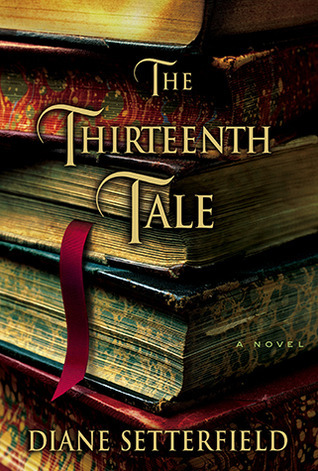
Diane Setterfield’s The Thirteenth Tale begins when Margaret Lea, an amateur biographer working in her father’s antique bookshop, is invited by Vida Winter, a renowned and enigmatic author, to record her life story. A story she has worked her entire life to conceal.
The premise had me intrigued and the setting of the story helped draw me into the mystery with a familiar yet otherworldly feeling. Vida’s house in the country is very grand and isolated, and the time period is a bit vague—the setting seems contemporary, but the life Vida describes her mother and uncle having feels more Edwardian, and Margaret writes letters rather than emails, putting us somewhere in the late 20th century, but hard to say exactly when.
The writing style is very pretty, but also a little distant and detached. This makes it difficult to connect with the characters, but fortunately Vida Winter’s family history is pretty juicy, so I was still eager to find out what happened next. The frame story with Margaret was a little more work to get through. Margaret is the sort of person who, to quote Lady Violet Crawley, “has read too many novels.” For example, her solution to a little a little emotional turmoil is to wander outside in terrible weather, get very sick and take to her bed, wasting days of a dying woman’s limited time. She also has an unhealthy fixation on her twin sister, who died at birth.
While Vida is certainly a mysterious character, her story is not a mystery. I have my limits when it comes to twists relying on unreliable narrators, and while this one didn’t cross the line, it was certainly flirting with it. I will concede that all the clues are there in the story—I actually jokingly guessed the twist myself at one point, but I was really hoping it would be more than that.
All in all, I give The Thirteenth Tale 3 stars out of 5. It’s not perfect, but it tells a soapy and compelling story with lots of nods for book lovers.
 Christian Douglass Writes