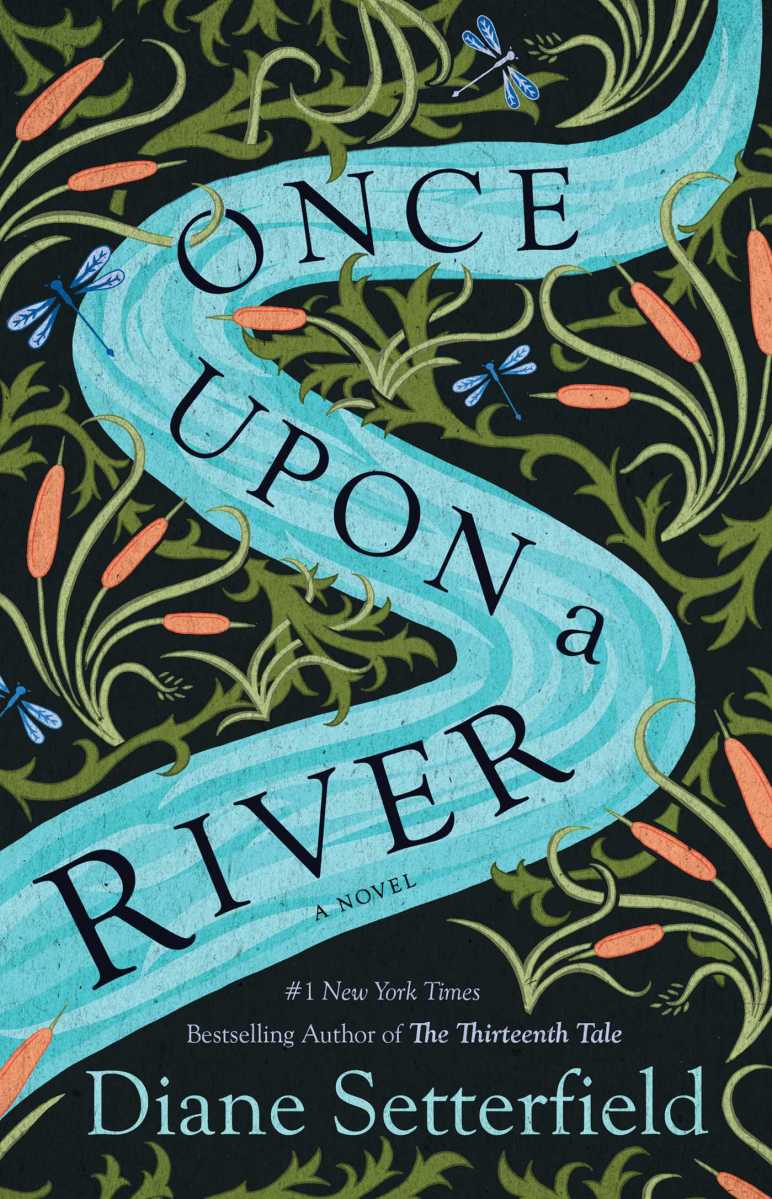
Set in the late 1800s, Diane Setterfield’s Once Upon a River is centered around the community tied to the Swan at Radcot, an inn along the Thames. It begins with the mysterious arrival of seriously injured man carrying a drowned little girl, yet hours later the girl breathes again, and when the man is revived in the morning, he reveals he knows nothing about her, but only found her after his own accident on the river. The girl herself doesn’t speak, and so theories and stories abound as to who she really is, how she came to be in the river, and how she miraculously came back to life.
The story struck me as a bit Dickensian, with such a large cast of characters (some more necessary to the plot than others), and multiple seemingly loosely related plots coming closer together over time, while also walking a fine with magical realism, never truly picking a side. I appreciated that while, in the end, Once Upon a River does tie up all of its plotlines, it still offers two types of answers to its biggest mysteries: the practical, scientific one, and the less definite, more mystical possibility.
Though the plot does keep moving, the book, with its emphasis on stories and storytellers, has a dreamy quality that makes the pace feel slower. And much like the river in the title, you may have an idea of where the story is taking you, but how it gets you there is still an enjoyable ride. It’s character-driven, letting you get to know the community of the Swan, and getting to know the people is just as interesting as uncovering the truth of their story. And in true Dickensian fashion, some characters are more compelling, and definitely more likable, than others, so some sections are easier to get through than others.
It’s not the type of book everyone will like, with its small detours and abundance of detail, but I enjoyed it, and if you’re in the mood for an understated, patient reading experience with a hint of magic, you might just like it too. For my taste, I give it three starts out of five.
 Christian Douglass Writes