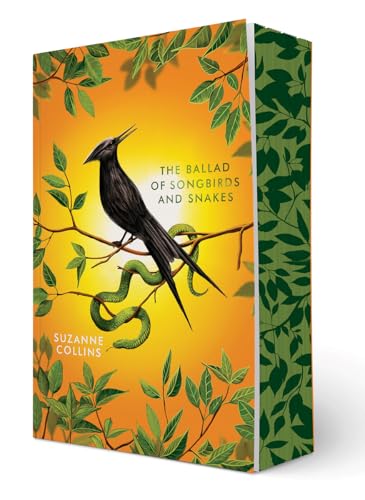
They say a good villain sees himself as a hero, but Coriolanus Snow must be the exception that proves the rule, because while he might delude himself enough to believe some of his actions are necessary, he is fully aware they aren’t good. But what does the cost matter, so long as Snow lands on top?
This is no story of a tragic, sympathetic slide into villainy. This is just a closer look at what makes a monster tick. We’re inside Snow’s head, and not everyone is going to like that, because outside of his desire to keep Lucy Gray alive through the Hunger Games, you won’t be rooting for him. Sure, there were moments when Coriolanus could have taken other paths, not become the murdering tyrant we know him to be by the time he meets Katniss, but he was never going to be a good person. He’s selfish, proud, obsessive, entitled, and resentful, and these traits are amplified by his trauma from living through the war with the districts. He does what it takes to keep not only himself alive, but the Snow reputation as well.
I found it interesting to see Panem in its early years, while the Capitol was still rebuilding. The districts were looked down on and mistrusted, but many Capitol citizens still saw them as human at least, and questioned the ethics of the Hunger Games. Snow might not have been able to be a better person, but Panem could have been a better place if people had been more vocal about their doubts in the beginning and looked for peace rather than revenge.
All in all, I enjoyed The Ballad of Songbirds and Snakes. It’s a fascinating character study that managed to intrigue me enough to follow a character I don’t like to an ending I knew would be unhappy.
 Christian Douglass Writes